

Natural Chewing Gum
Made from Sapodilla chicle and Arabic gum, powered by xylitol that actively fights cavities. No plastic, no synthetic gum base, no artificial sweeteners. Just a natural way to care for your teeth when brushing is not an option.
What Makes Our Chewing Gum Different
Our chewing gum is made from two natural tree-derived ingredients: chicle from the Sapodilla tree and Arabic gum from the Acacia tree. These are the original chewing gum materials, used long before the industry switched to synthetic plastic bases in the 1960s. They are biodegradable, sustainably harvested, and provide a satisfying chew without any plastic.
The sweetener is xylitol, not just for taste, but as a functional ingredient. Xylitol is a naturally occurring sugar alcohol that the cavity-causing bacterium Streptococcus mutans cannot metabolise. When S. mutans absorbs xylitol, it cannot produce the acids that dissolve enamel. Over time, this starves the bacteria and reduces their numbers. Studies dating back to the 1970s Turku Sugar Studies in Finland have demonstrated dramatic reductions in cavity rates among regular xylitol users.
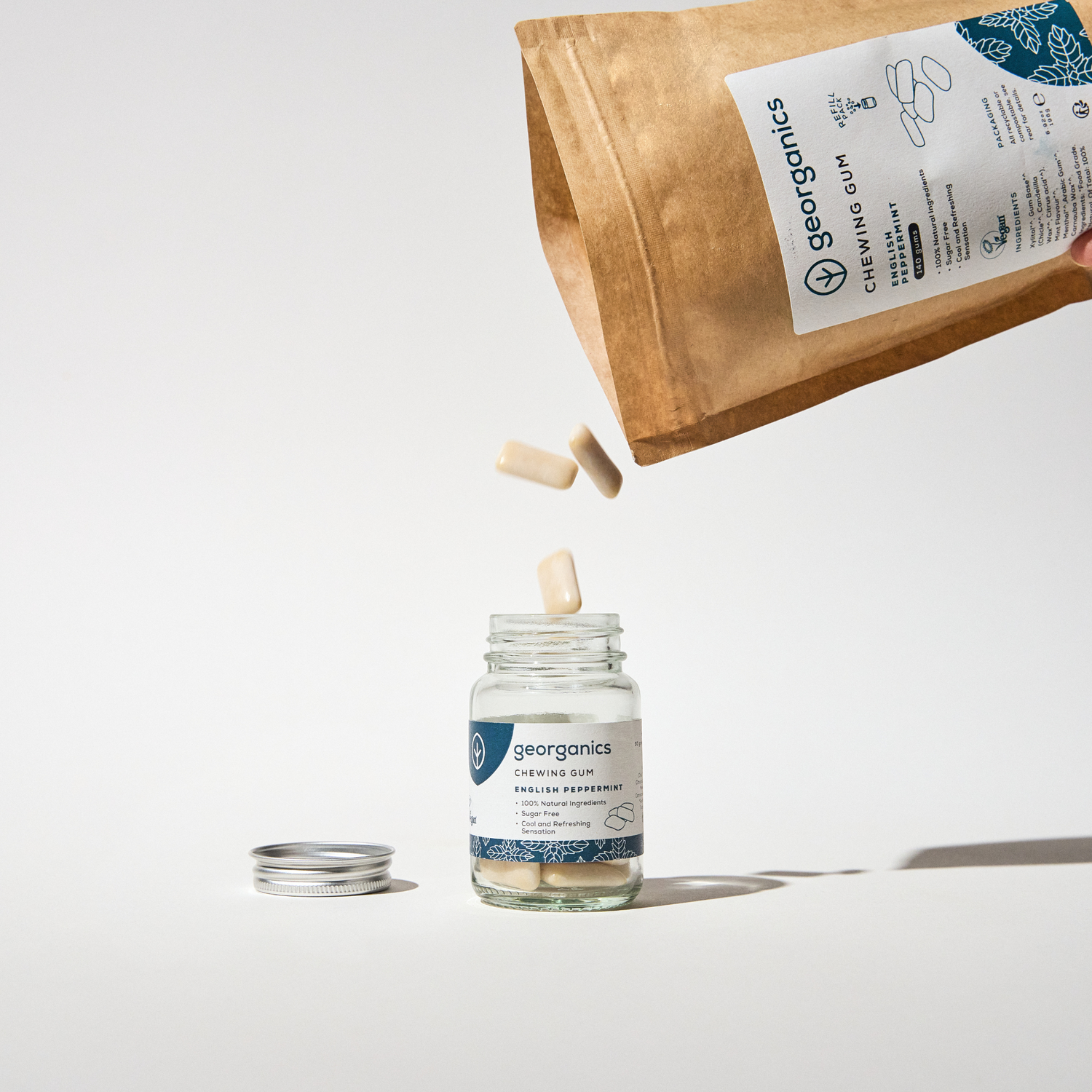
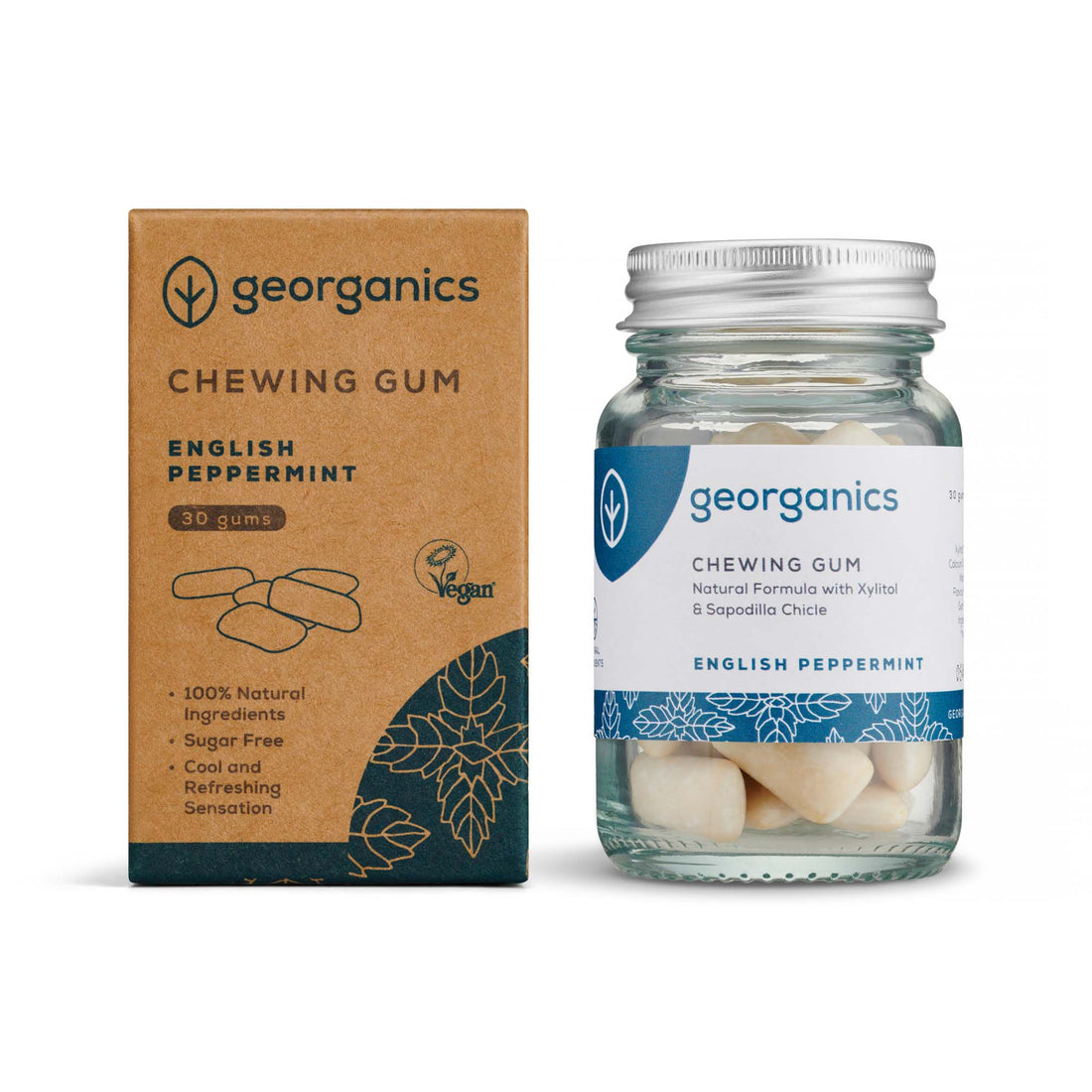
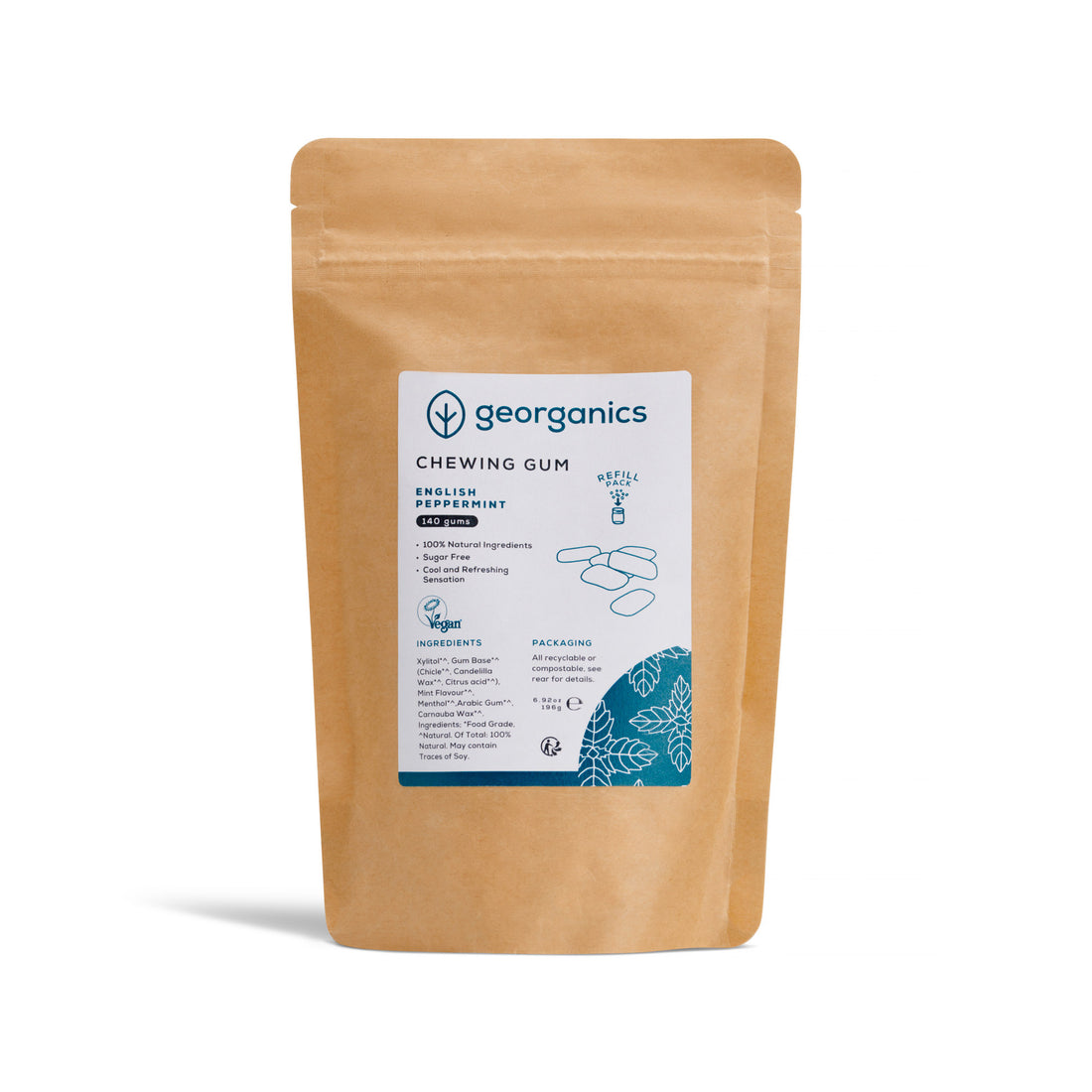
Infused with peppermint essential oil for lasting freshness. Available in a 30 piece refillable tin and a 140-piece plastic-free refill pack. 100% vegan and cruelty-free.
Benefits
-
Xylitol Fights Cavities
Starves S. mutans bacteria so they produce less acid. Clinically proven to reduce cavity rates by 30-85% with regular use.
-
Stimulates Saliva
Chewing triggers your mouth's natural defence system. Saliva neutralises acids, washes away debris, and remineralises enamel.
-
Natural Chicle Base
Made from Sapodilla tree chicle and Acacia Arabic gum. Biodegradable, no synthetic polymers, no plastic base.
-
Refillable & Plastic-Free
30-piece refillable tin + 140-piece refill pack. No single-use plastic packaging at any point.
Featured collection
When to Use Our Chewing Gum
After meals: The 20-30 minutes after eating is when acid levels peak. Chew one piece to stimulate saliva and neutralise the acid attack before it damages enamel.
Between brushes: When you cannot brush during the day, chewing gum is the most effective way to maintain oral hygiene on the go.
After coffee or tea: Acidic and staining drinks soften enamel temporarily. Chewing gum stimulates saliva to wash away staining compounds and restore pH balance.
After sugary snacks: Sugar is fuel for cavity-causing bacteria. Xylitol gum interrupts the bacterial acid production
cycle when you need it most.
It is not a replacement for brushing and
flossing, but it is one of the most effective habits you can add between your morning and evening routine.

Quick view
Chewing Gum Refill - Peppermint
-
Regular price
-
£15.90
-
Regular price
-
-
Sale price
-
£15.90
- Regular price
-
£15.90 - Regular price
-
- Sale price
-
£15.90
Quick view
Chewing Gum - Peppermint
-
Regular price
-
£4.90
-
Regular price
-
-
Sale price
-
£4.90
- Regular price
-
£4.90 - Regular price
-
- Sale price
-
£4.90
Make Chewing Gum Part Of Your Routine


FAQs
What is chicle and why do you use it instead of regular gum base?
Chicle is a natural latex harvested from the
bark of the Sapodilla tree, native to Central America. It was the original chewing gum base before the industry switched to synthetic polymers in the 1960s. Unlike synthetic gum bases (which are essentially plastic), chicle is biodegradable and sustainably harvested. Combined with Arabic gum from the Acacia tree, it provides a satisfying chew with zero plastic.
Is xylitol gum actually good for teeth?
Yes, and this is not a marketing claim.
Xylitol's oral health benefits have been studied extensively since the 1970s,
with landmark research in Finland demonstrating dramatic reductions in cavity rates. The mechanism is clear: S. mutans bacteria cannot metabolise xylitol, so they produce less acid and gradually decline in number. At the same time,n chewing stimulates saliva flow, which neutralises acids and delivers minerals back to enamel. Chewing gum is one of the most effective delivery methods because it combines both effects over a sustained period.
How often should I chew xylitol gum?
For maximum cavity protection, chew after each meal or sugary snack, this is when acid levels in your mouth peak. Most research suggests that 3-5 exposures to xylitol per day provides optimal benefit. Each piece should be chewed for 5-10 minutes to allow sustained xylitol release and saliva stimulation.
Can chewing gum replace brushing?
No. Chewing gum is a complement to brushing and flossing, not a replacement. It is most effective in the window between brushes, particularly after meals when acid attacks peak and brushing is not practical. Think of it as the third layer of your oral care routine: brushing and flossing at home, gum on the go.
Is this chewing gum suitable for children?
Xylitol gum is generally considered safe for
children who are old enough to chew gum without swallowing it, typically from around age 4-5. The xylitol benefits apply equally to developing and adult teeth. As always, supervise young children when chewing gum.
Is the packaging really plastic-free?
Yes. The 30-piece pack comes in a refillable
metal tin. The 140-piece refill comes in plastic-free, compostable packaging. The gum pieces themselves contain no synthetic polymers, the chicle and Arabic gum base is fully natural and biodegradable.
Does it taste as good as regular gum?
The peppermint flavour comes from real peppermint essential oil, so it is a genuine, natural freshness, not the synthetic flavour you get from conventional gum. The sweetness from xylitol is comparable to sugar. The chew texture from chicle is slightly different from plastic-based gum: a bit softer and more natural. Most people adjust quickly and prefer it once they do.