

Hydroxyapatite
A mineral that makes up 97% of tooth enamel, Hydroxyapatite bonds directly with the tooth surface to fill microscopic cracks and restore lost density. Used daily, it helps remineralise enamel, reduce sensitivity and strengthen teeth, working with your body's own structure rather than creating an external barrier.
-
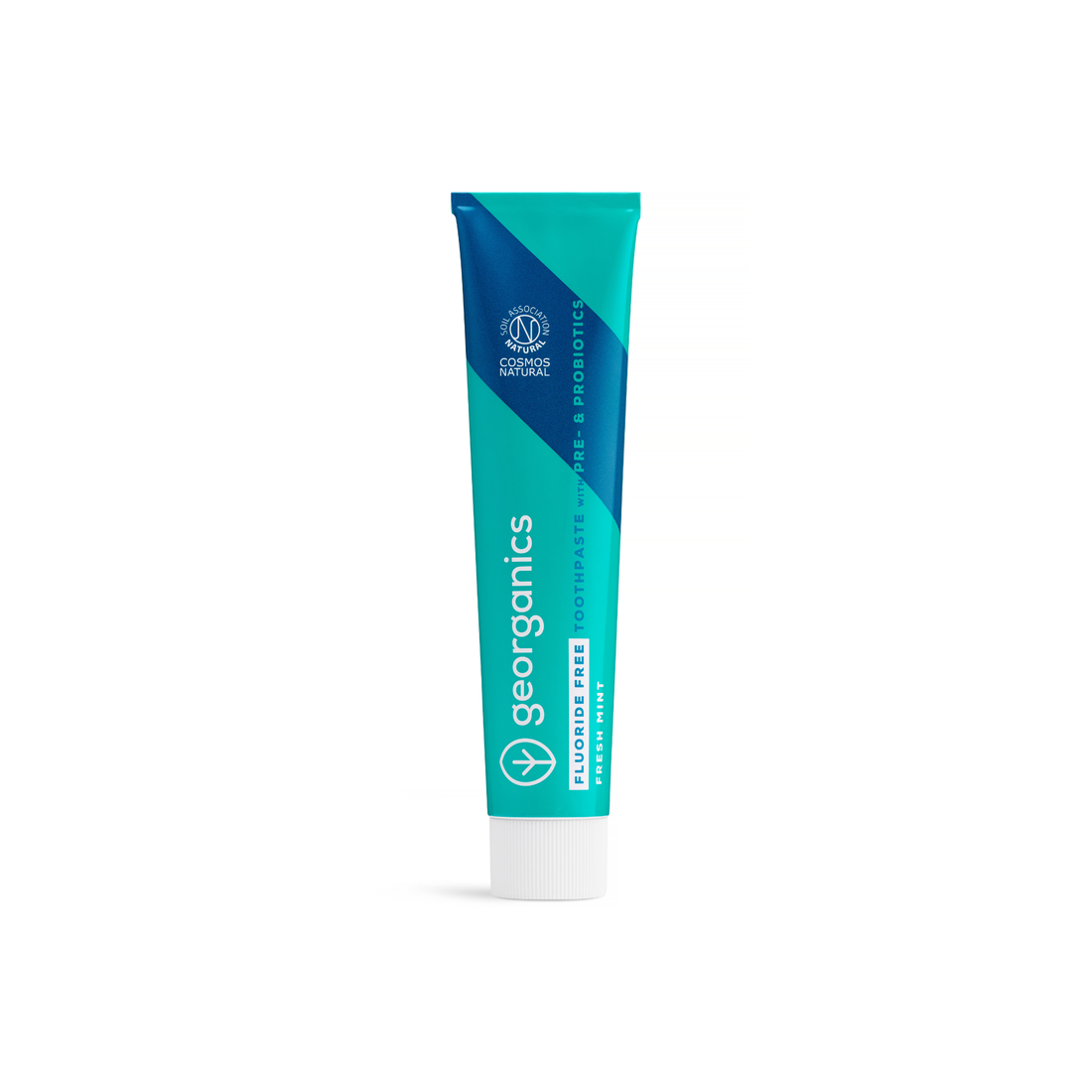
Toothpaste with Hydroxyapatite - Fresh Mint - Fluoride
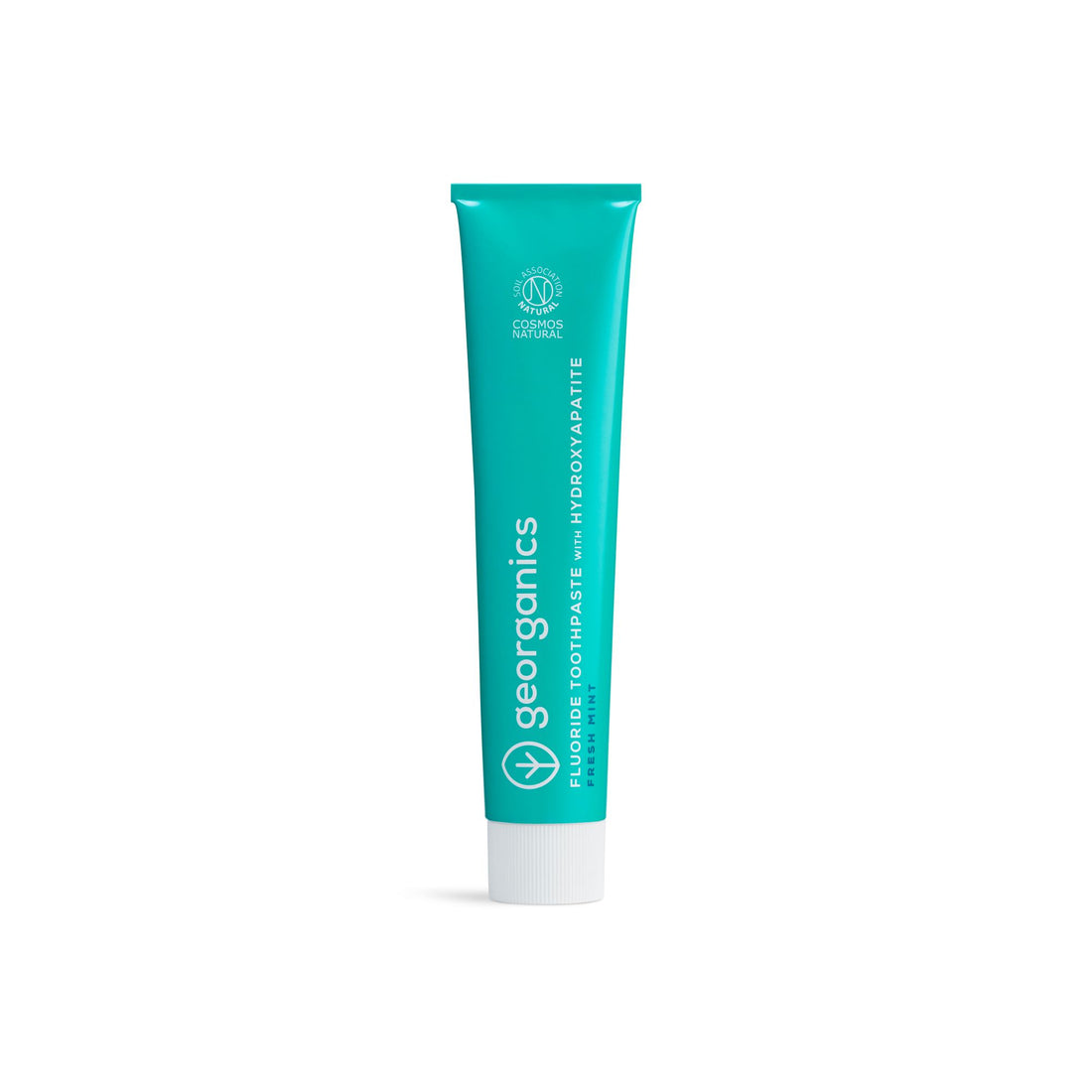
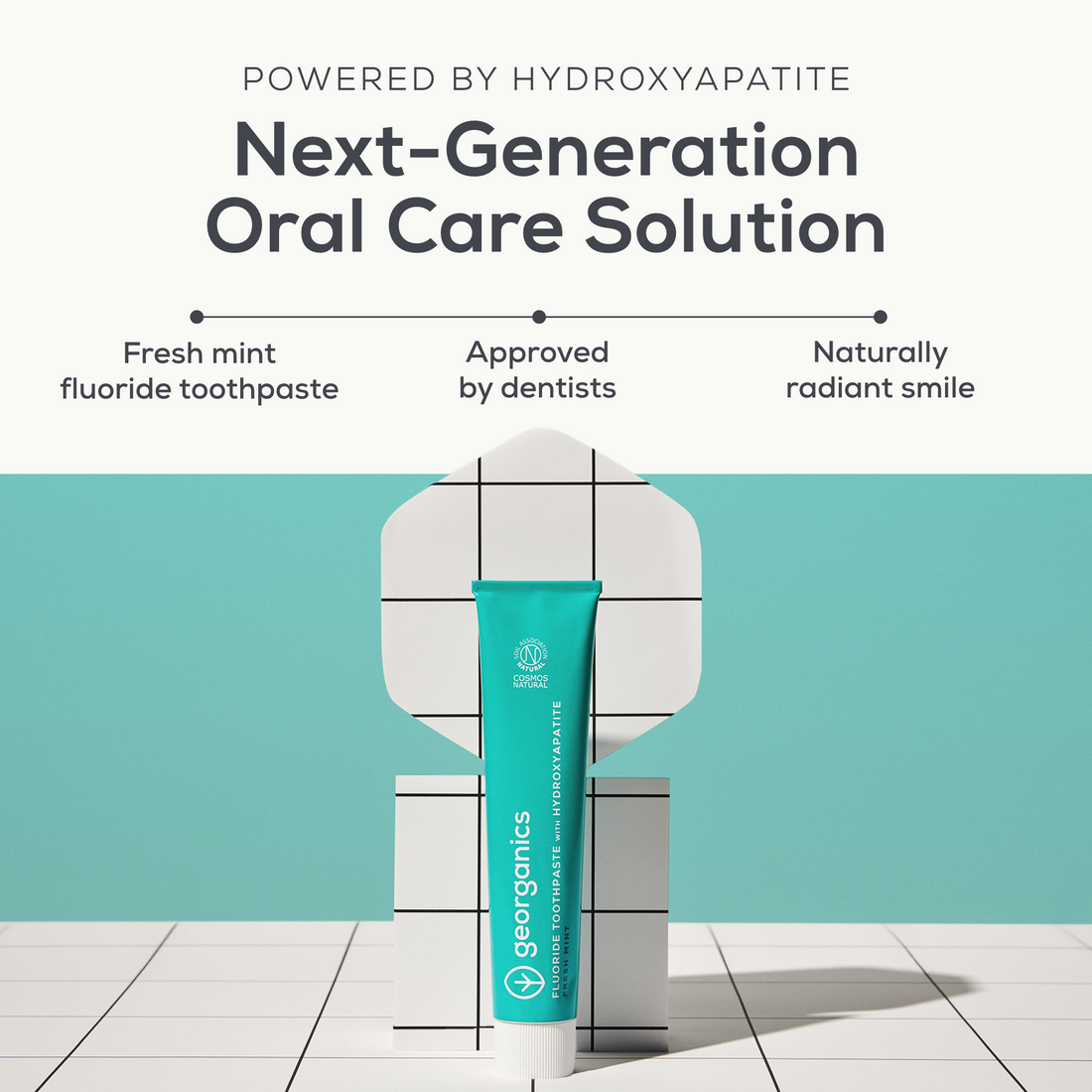 Vendor:Toothpaste with Hydroxyapatite - Fresh Mint - FluorideGeorganics
Quick view
-
NEW - Toothpaste with Hydroxyapatite - Fennel - Fluoride Free
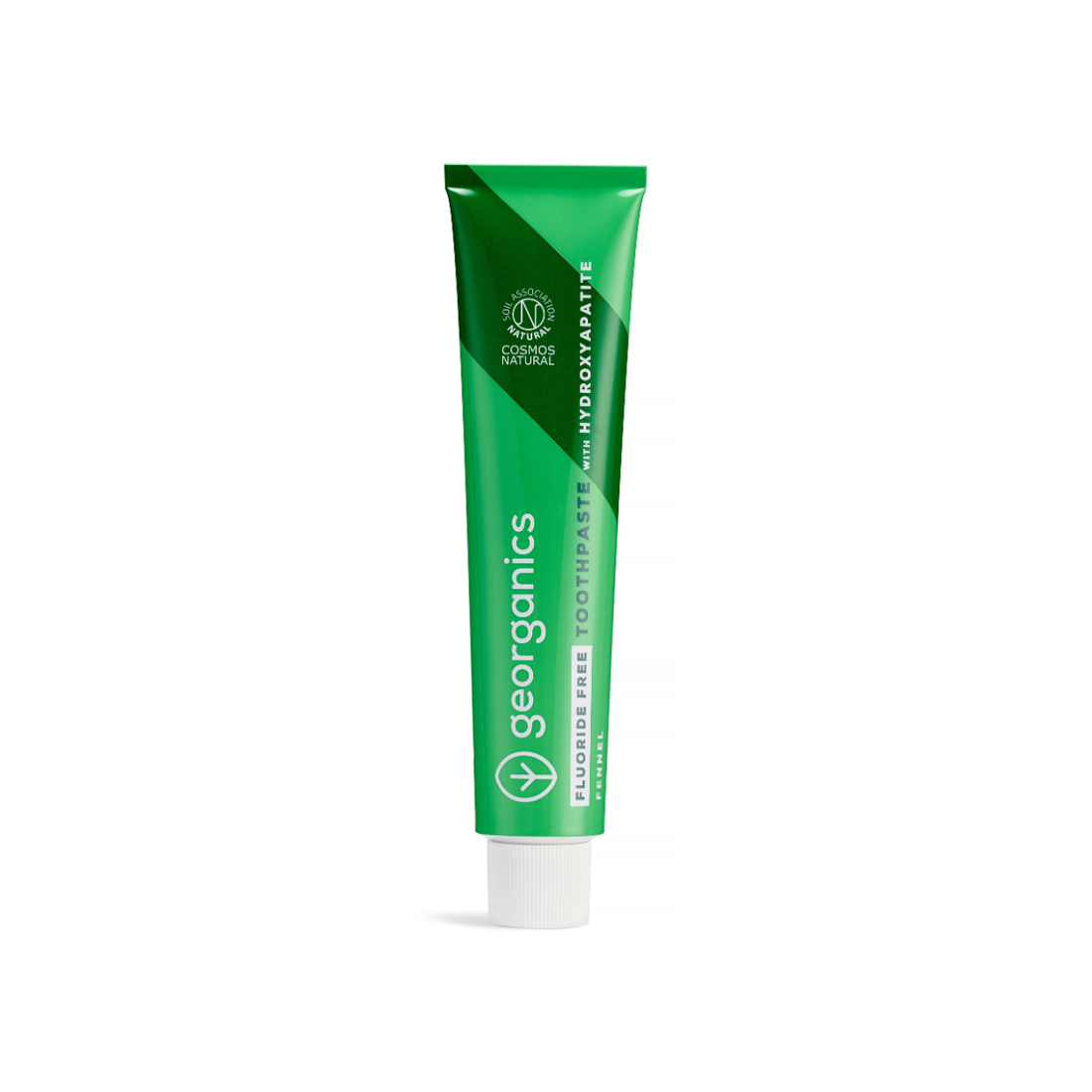
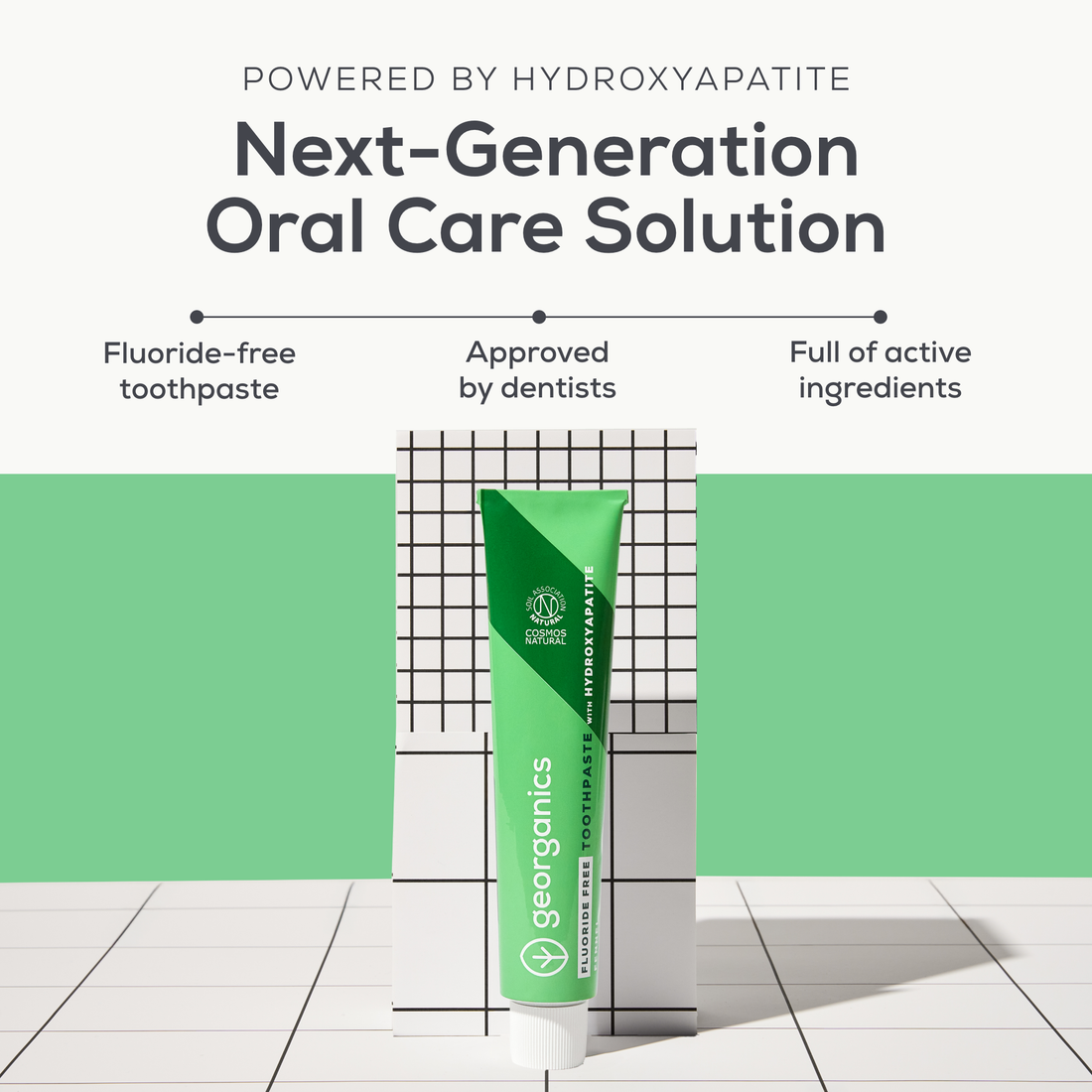 Vendor:NEW - Toothpaste with Hydroxyapatite - Fennel - Fluoride FreeGeorganics
Quick view
-
Toothpaste with Hydroxyapatite - Activated Charcoal - Fluoride
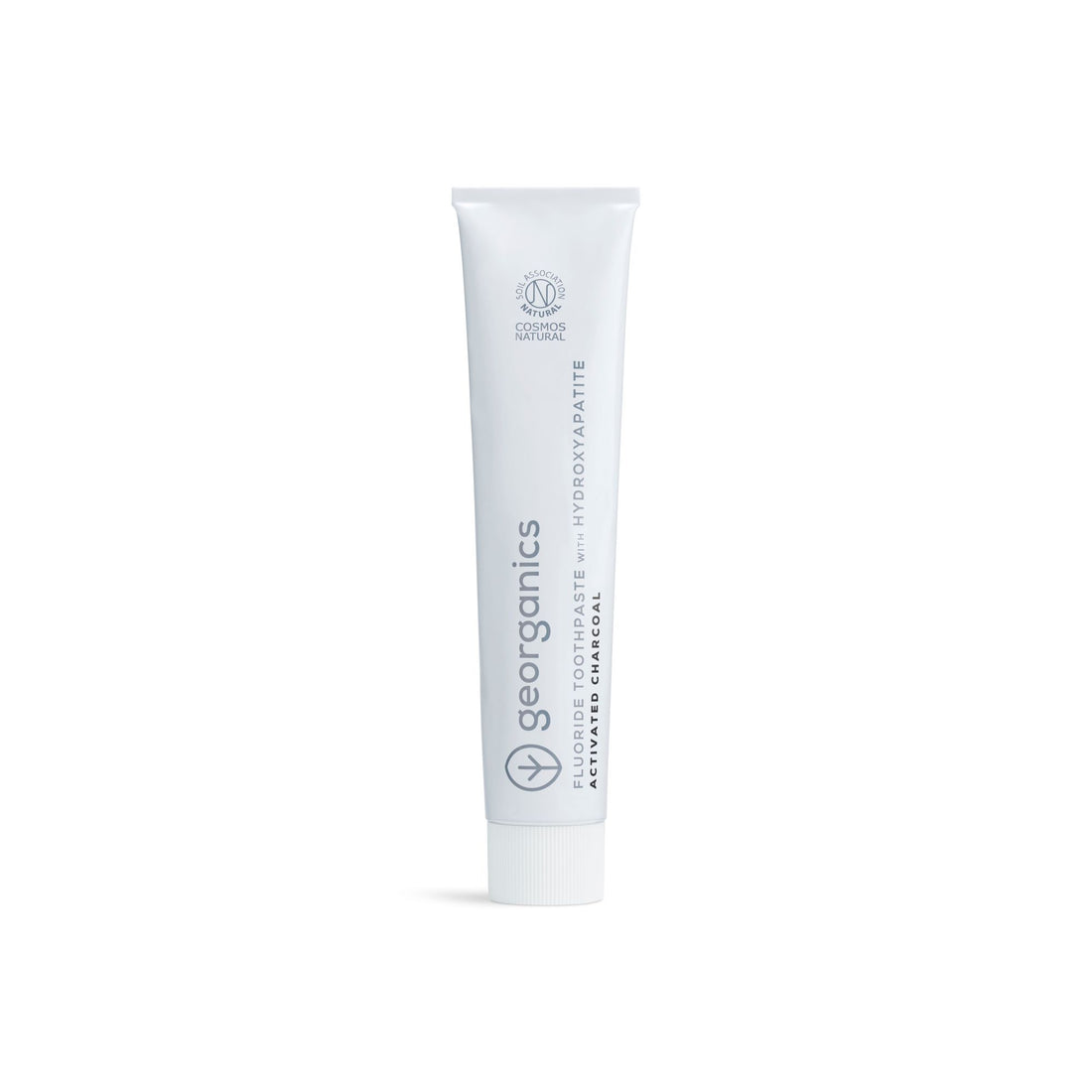
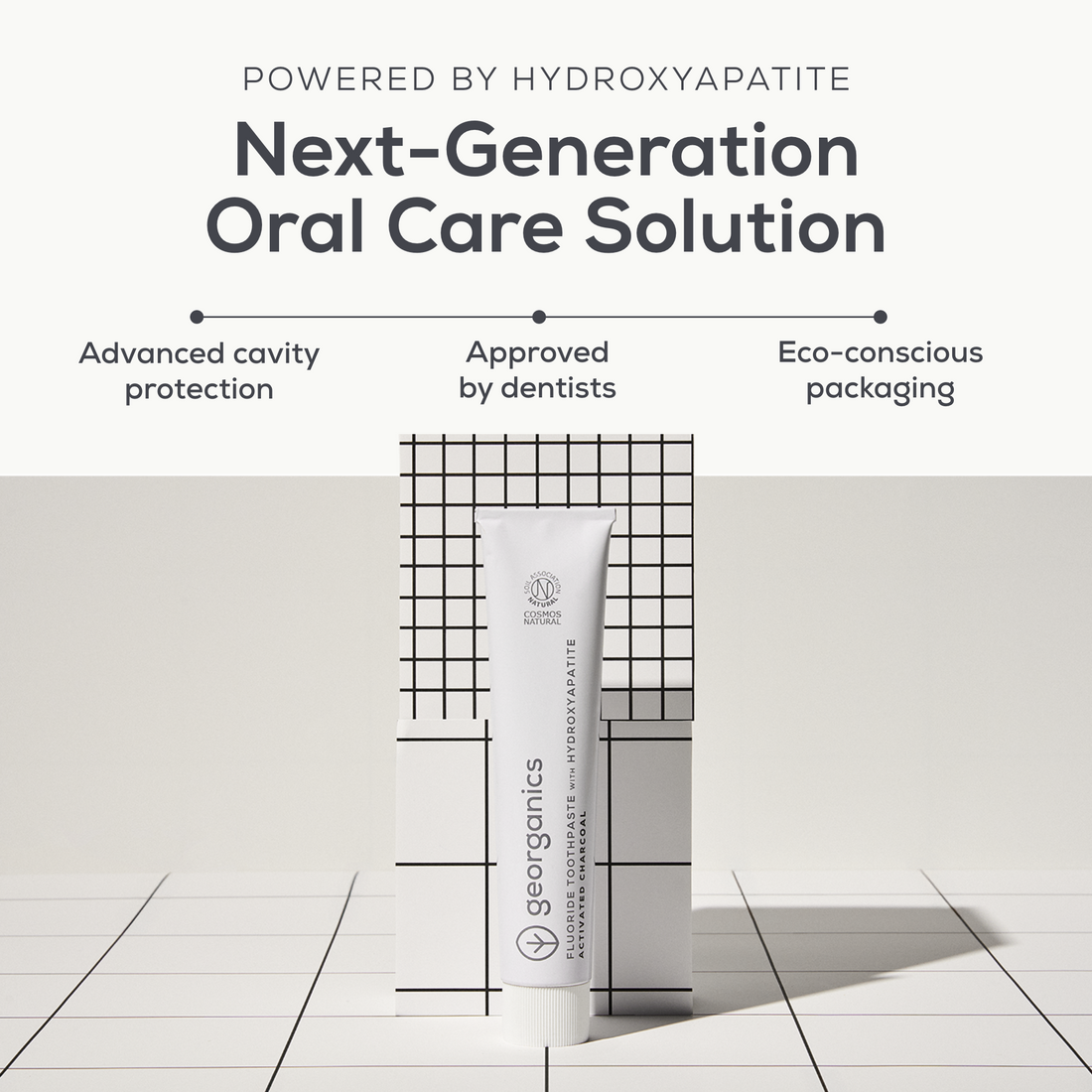 Vendor:Toothpaste with Hydroxyapatite - Activated Charcoal - FluorideGeorganics
Quick view
-
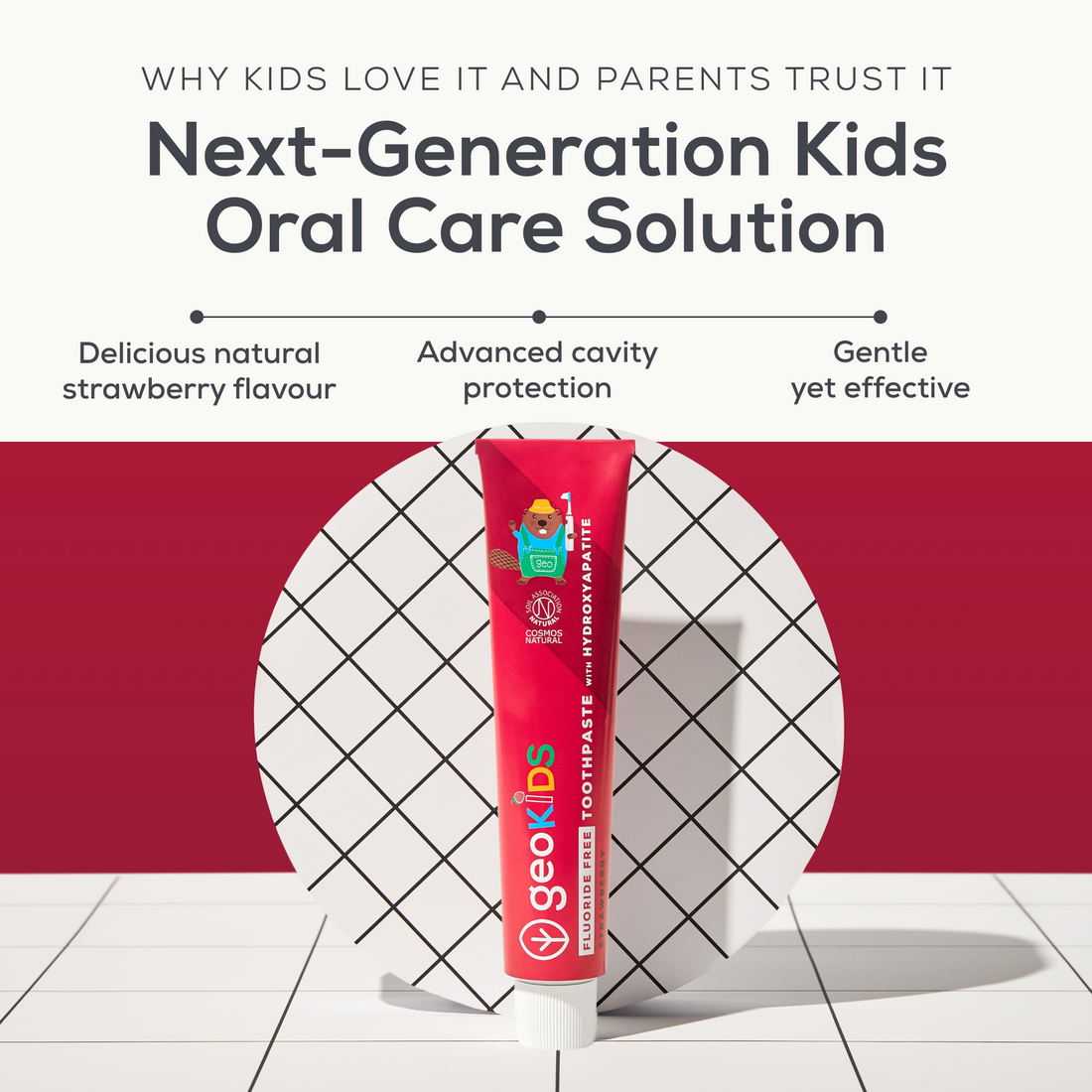
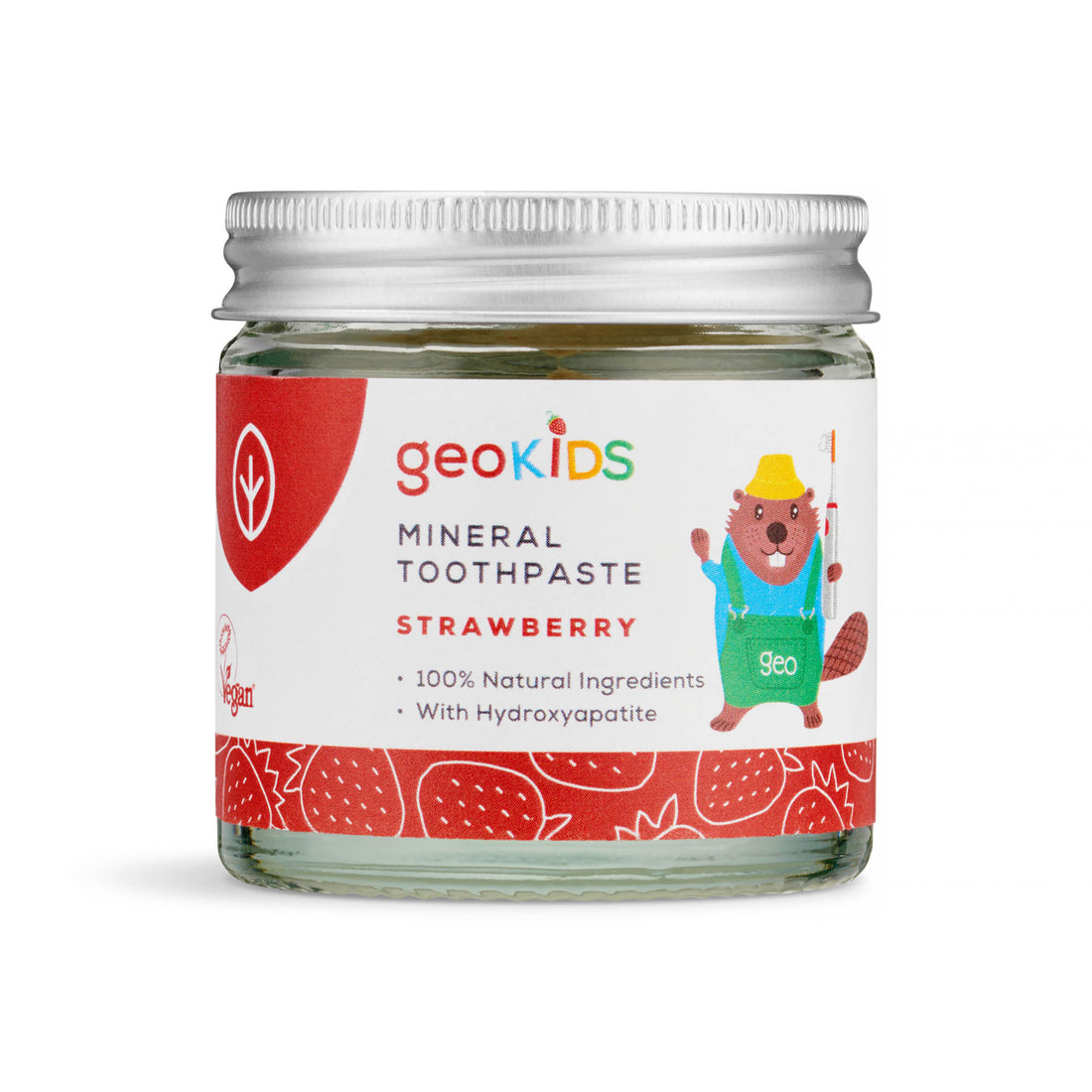
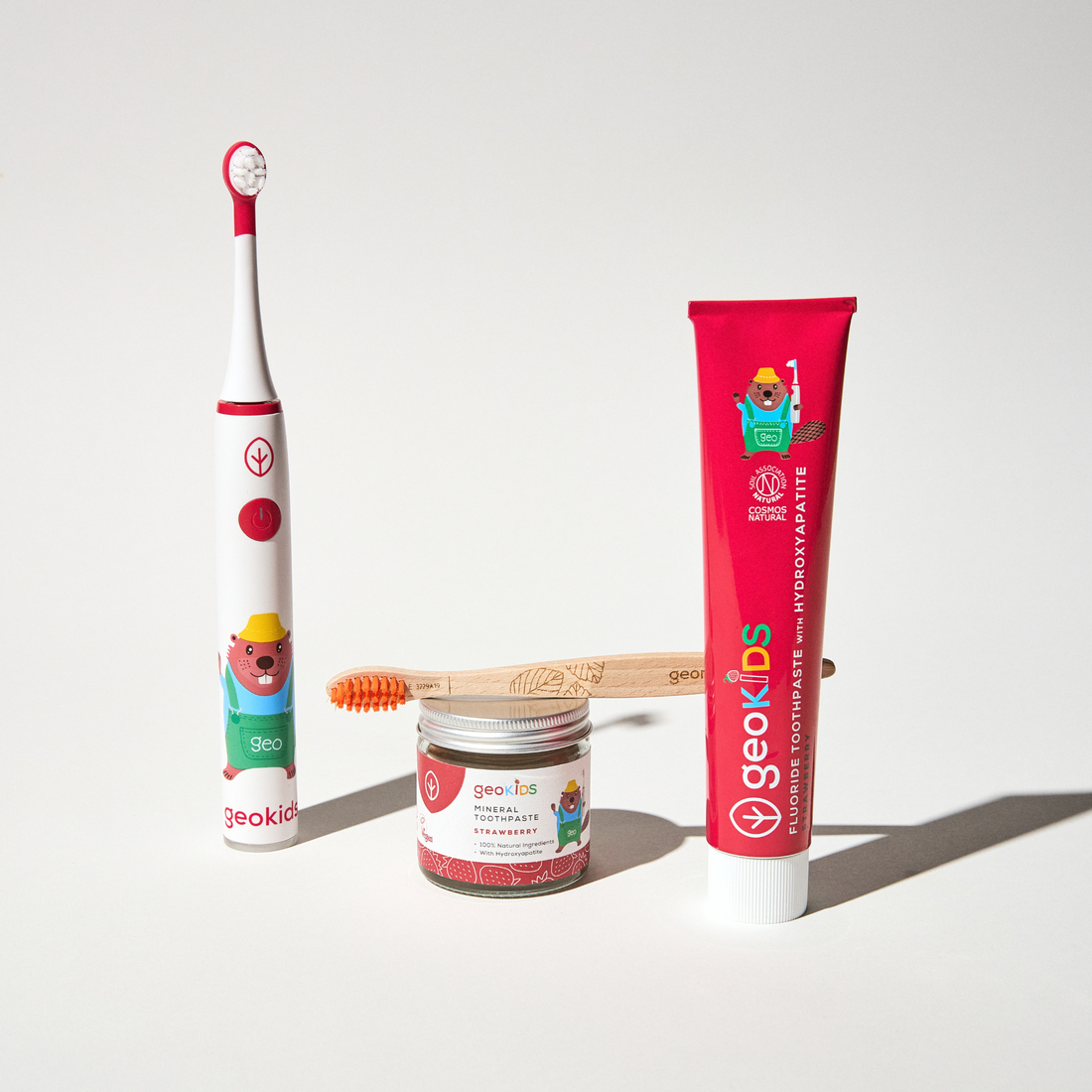
Kids Toothpaste with Hydroxyapatite - Strawberry - Fluoride
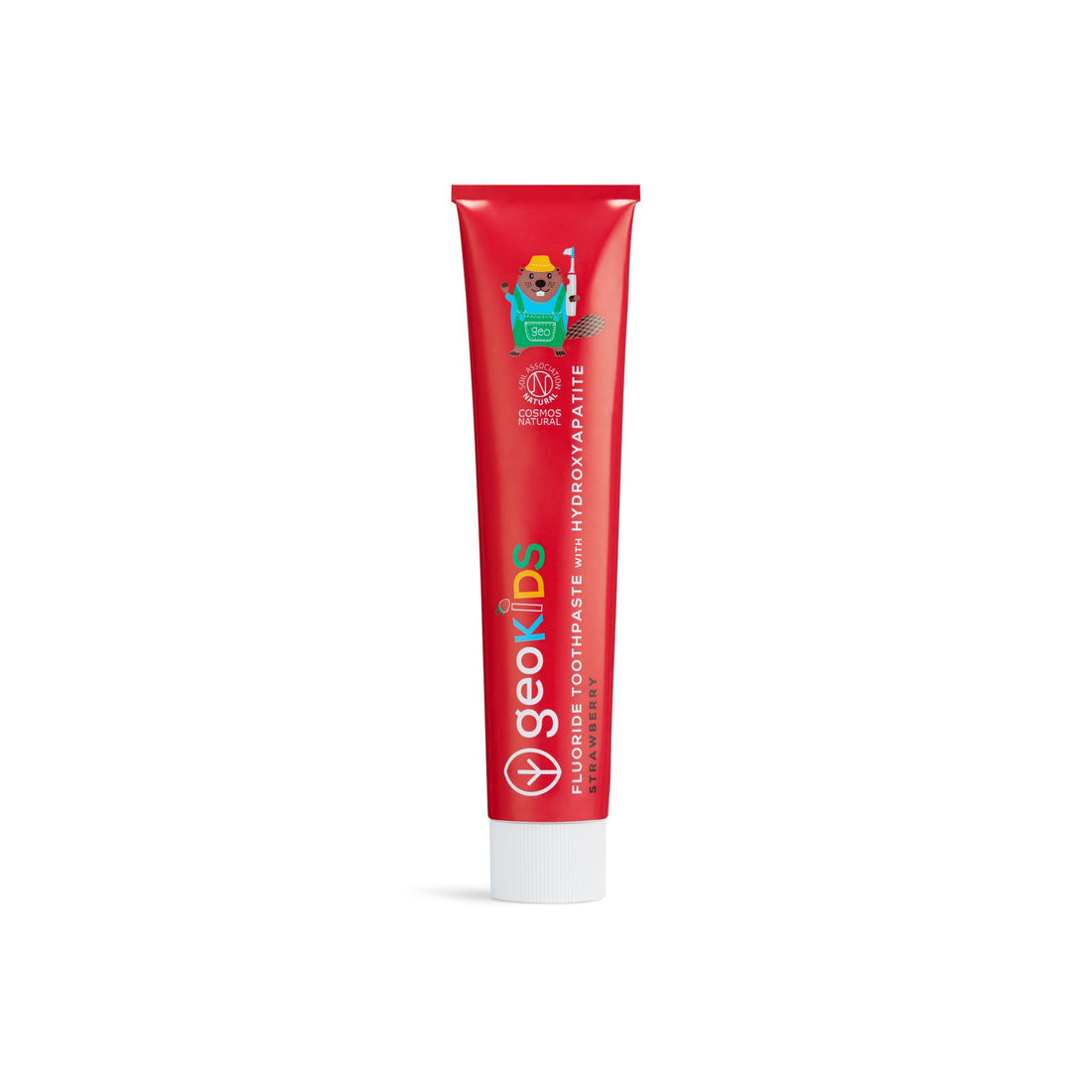
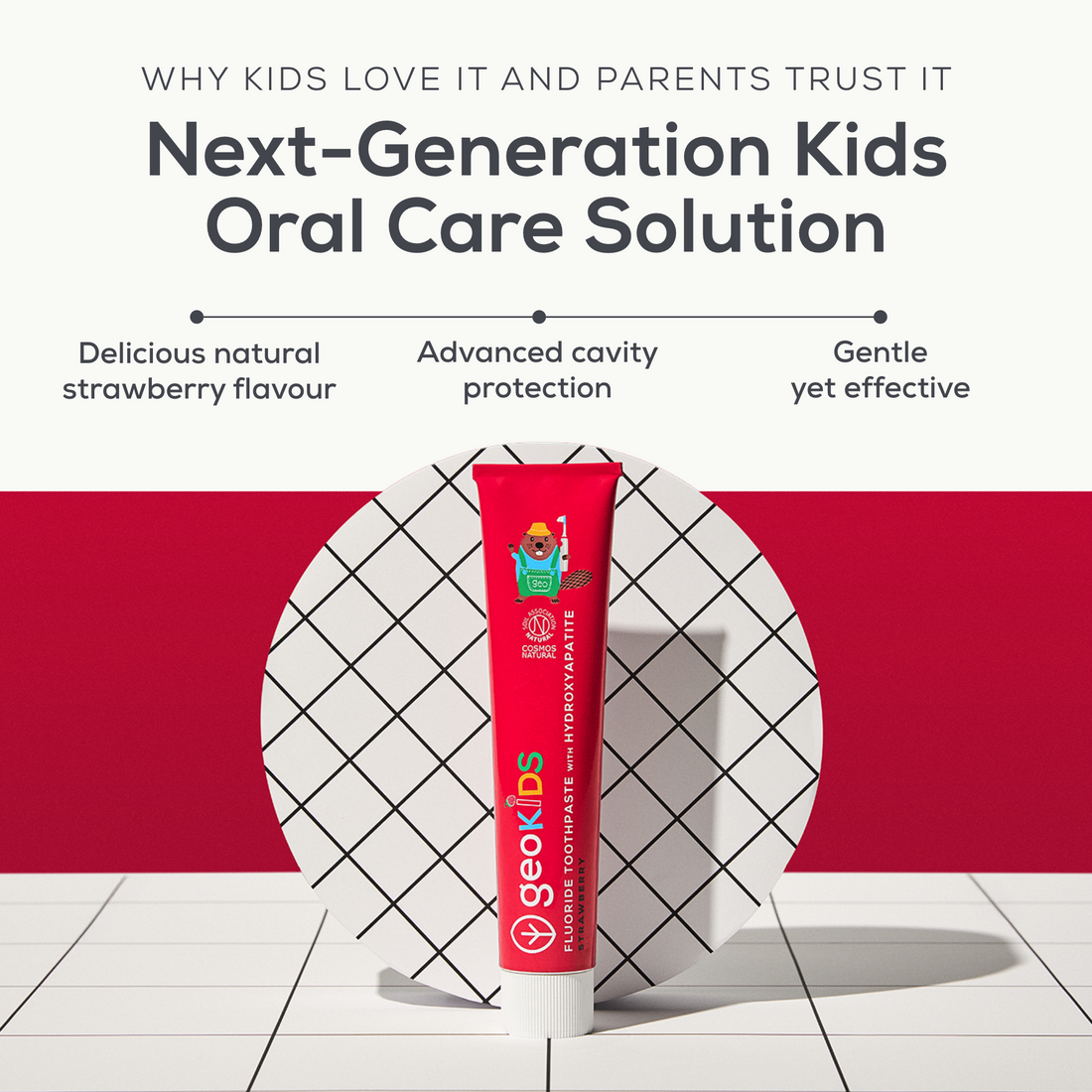 Vendor:Kids Toothpaste with Hydroxyapatite - Strawberry - FluorideGeorganics
Quick view
-
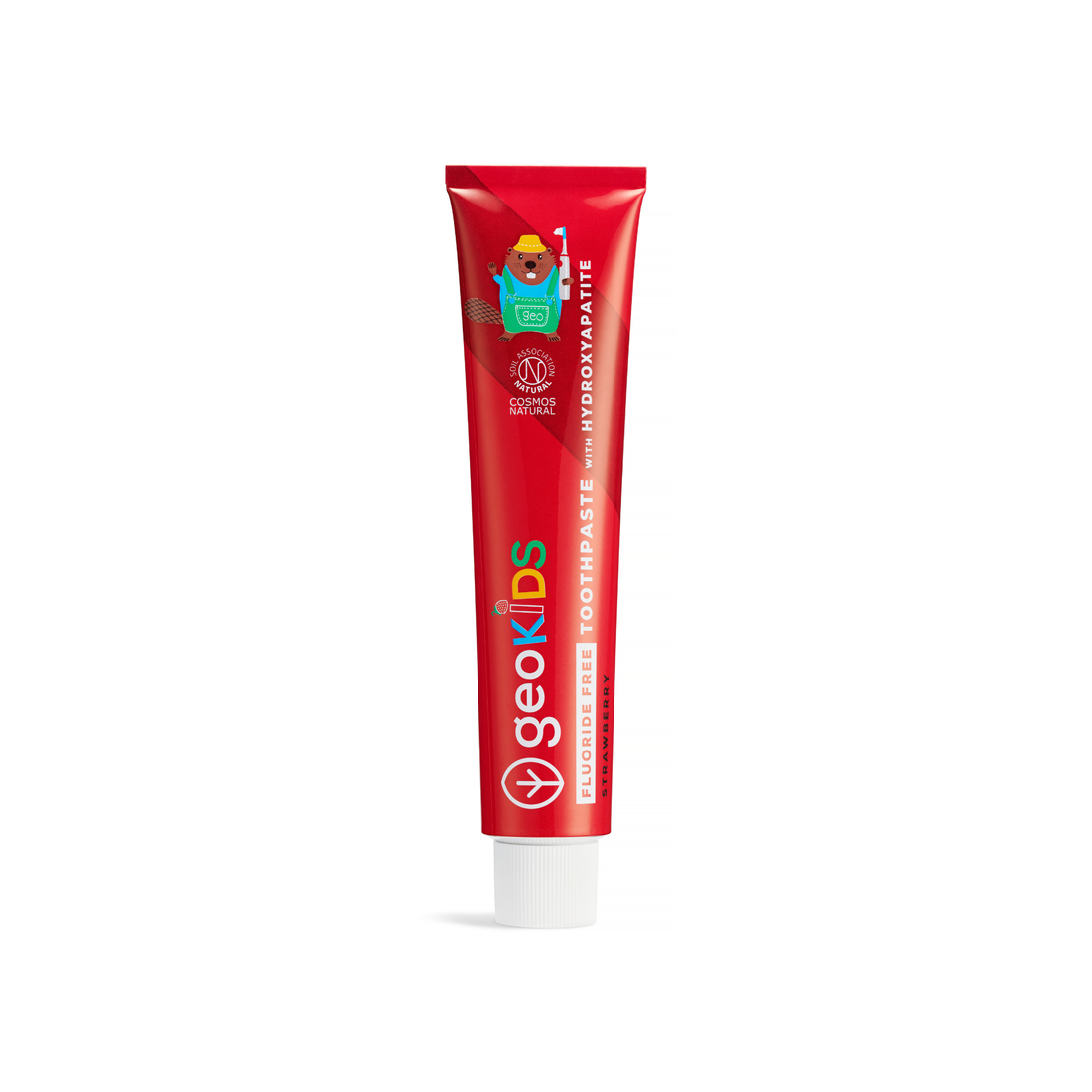
Kids Fluoride Toothpaste - Strawberry with HYDROXYAPATITE
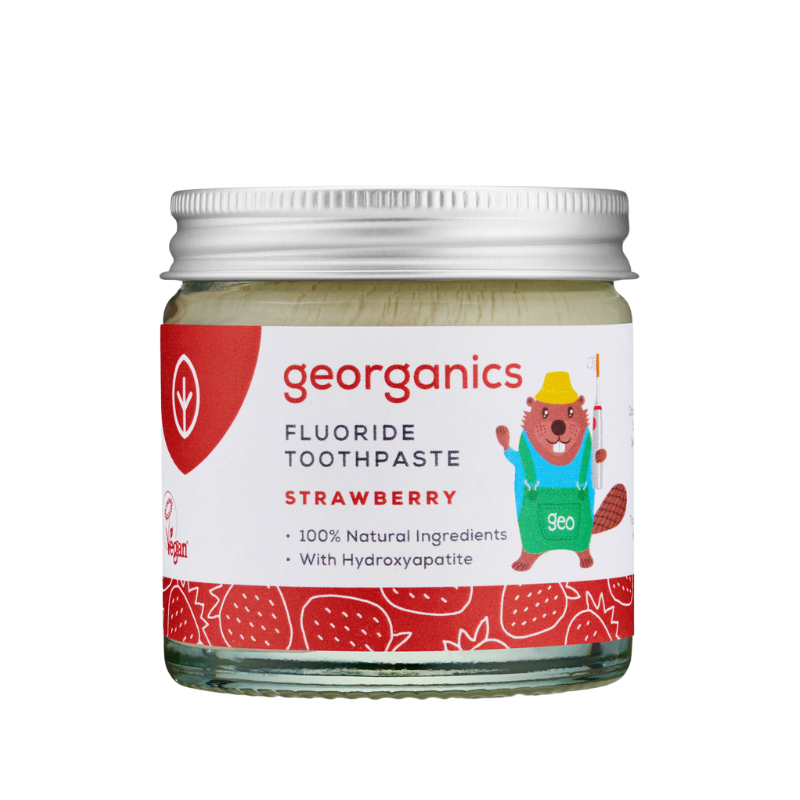
 Vendor:Kids Fluoride Toothpaste - Strawberry with HYDROXYAPATITEGeorganics
Quick view

FAQs
What is Micro-Hydroxyapatite?
Micro-Hydroxyapatite (mHAp) is a form of calcium phosphate that makes up approximately 97% of your tooth enamel and 70% of your dentine. When used in oral care, synthetic micro-hydroxyapatite particles are biocompatible, meaning your body recognises them as its own. They bond directly with the tooth surface, filling microscopic gaps and cracks in the enamel. This is what makes hydroxyapatite one of the most promising ingredients in modern oral care: it works with your teeth's natural structure rather than creating an external chemical barrier.
What is the difference between micro-hydroxyapatite and nano-hydroxyapatite?
The difference is particle size. Micro-hydroxyapatite (mHAp) uses particles in the micrometre range, while nano-hydroxyapatite (nHAp) uses much smaller particles at the nanometre scale. Both forms are effective at remineralising enamel, but there has been some regulatory discussion around the safety of nanoparticles in oral care products, particularly in the EU. At Georganics, we use micro-hydroxyapatite, the form with the longest safety track record and the broadest regulatory acceptance. It delivers the same remineralisation benefits without the questions that surround nano-scale particles.
Is hydroxyapatite toothpaste better than fluoride?
It depends on what you're looking for. A growing body of peer-reviewed research suggests that hydroxyapatite toothpaste can be comparable to fluoride toothpaste in preventing demineralisation and supporting remineralisation. The key difference lies in the mechanism: fluoride forms a protective layer of fluorapatite on the tooth surface, while hydroxyapatite integrates directly into the enamel structure. In Japan, hydroxyapatite has been approved as an anti-cavity agent since the 1990s. Neither is objectively "better", they work differently, and the right choice depends on your personal preferences, needs and how you want your oral care to function.
Can hydroxyapatite repair tooth enamel?
Hydroxyapatite supports the repair of early-stage enamel damage, a process known as remineralisation. When acids from food, drink or bacteria dissolve minerals from the enamel surface, microscopic lesions form. Hydroxyapatite particles fill these lesions and bond with the surrounding enamel, restoring mineral density and smoothness. It's important to note that once enamel damage has progressed to the point of a visible cavity, no toothpaste ingredient, including hydroxyapatite, can reverse it. But for the early, invisible stages of demineralisation that happen daily, hydroxyapatite is one of the most effective ingredients for genuine enamel repair.
Do dentists recommend hydroxyapatite toothpaste?
Increasingly, yes. Hydroxyapatite has been used in clinical dentistry for decades, in bone grafts, implant coatings and restorative materials, long before it appeared in toothpaste. As the body of research around its use in daily oral care grows, more dental professionals are acknowledging it as a credible option, particularly for patients who prefer or need a fluoride-free alternative. It is already mainstream in Japan, where it has been a recognised anti-caries ingredient for over 30 years. In Europe and the UK, awareness is growing rapidly, and many dentists now consider it a well-supported choice.
Does hydroxyapatite toothpaste actually work?
Yes. The evidence base for hydroxyapatite in oral care has expanded significantly over the past decade. Multiple randomised controlled trials have demonstrated its effectiveness in remineralising early enamel lesions, reducing sensitivity and protecting against acid erosion. One of the reasons it works so well is its biocompatibility: because mHAp particles are structurally identical to natural enamel, they integrate seamlessly rather than sitting on the surface. This means the repair is structural, not cosmetic. For the best results, consistent twice-daily use is key, just as it would be with any active oral care ingredient.
Is hydroxyapatite safe for children's teeth?
Hydroxyapatite is one of the safest oral care ingredients available for children. Because it is biocompatible and non-toxic, there is no risk associated with accidental swallowing, which is a common concern with young children who haven't yet mastered spitting out toothpaste. Unlike fluoride, there is no risk of fluorosis from overexposure. This makes hydroxyapatite toothpaste an excellent option for children from a very early age, giving parents the reassurance of effective enamel protection without the worry of ingestion.
Is hydroxyapatite the same as fluoride?
No, they are fundamentally different ingredients that achieve a similar goal through different mechanisms. Fluoride works by converting the calcium phosphate in your enamel into fluorapatite, a harder compound that is more resistant to acid dissolution. Hydroxyapatite works by directly replenishing the calcium phosphate that your enamel is already made of, filling in gaps and restoring the original mineral structure. Think of fluoride as adding a protective coating, and hydroxyapatite as rebuilding from within. Both are effective approaches to enamel protection, but they are not interchangeable and they are not the same substance.
Complete your natural oral care routine with these perfect pairings
-
Sonic Toothbrush
Discover Our Sonic ToothbrushMaximise the effectiveness of your oral care with a Sonic Toothbrush- ensuring powerful cleaning, stronger enamel, and superior cavity protection.
-
Dental Floss
Discover Our dental flossComplement your Hydroxyapatite toothpaste with our dental floss collection to effectively remove plaque and maintain healthy gums.
-
Oil Pulling
Discover our oil pullingEnhance your oral care routine with Oil Pulling, a traditional practice that supports oral hygiene and fresh breath.